Designing for Trust
FriendlyTransfer is a peer-to-peer platform that helps users avoid international fees by coordinating local money transfers without a financial institution. As a Product Designer Consultant, I created a structured, step-by-step experience that built trust between strangers, reduced support inquiries by 45%, and increased closed transactions by 30%.
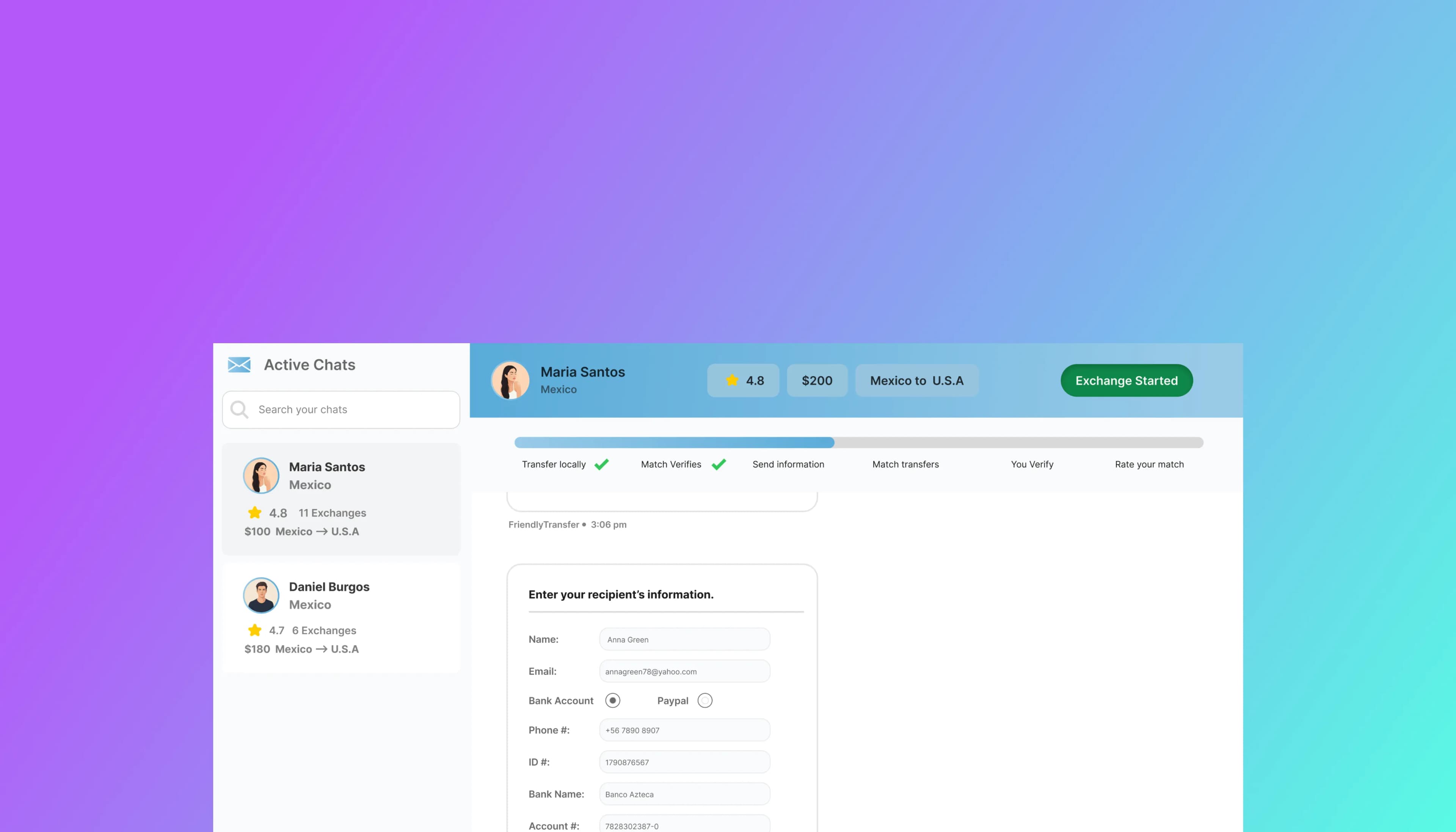
Problem
Establishing trust and accountability between strangers exchanging money without the authority or infrastructure of a traditional financial institution.
Solution
As a Product Designer Consultant, I introduced a structured flow that guided users step by step, building clarity, trust, and accountability throughout the exchange.
Impact
- 45% reduction in support tickets and user questions
- 30% increase in completed exchanges
A Smarter Way to Send Money Across Borders
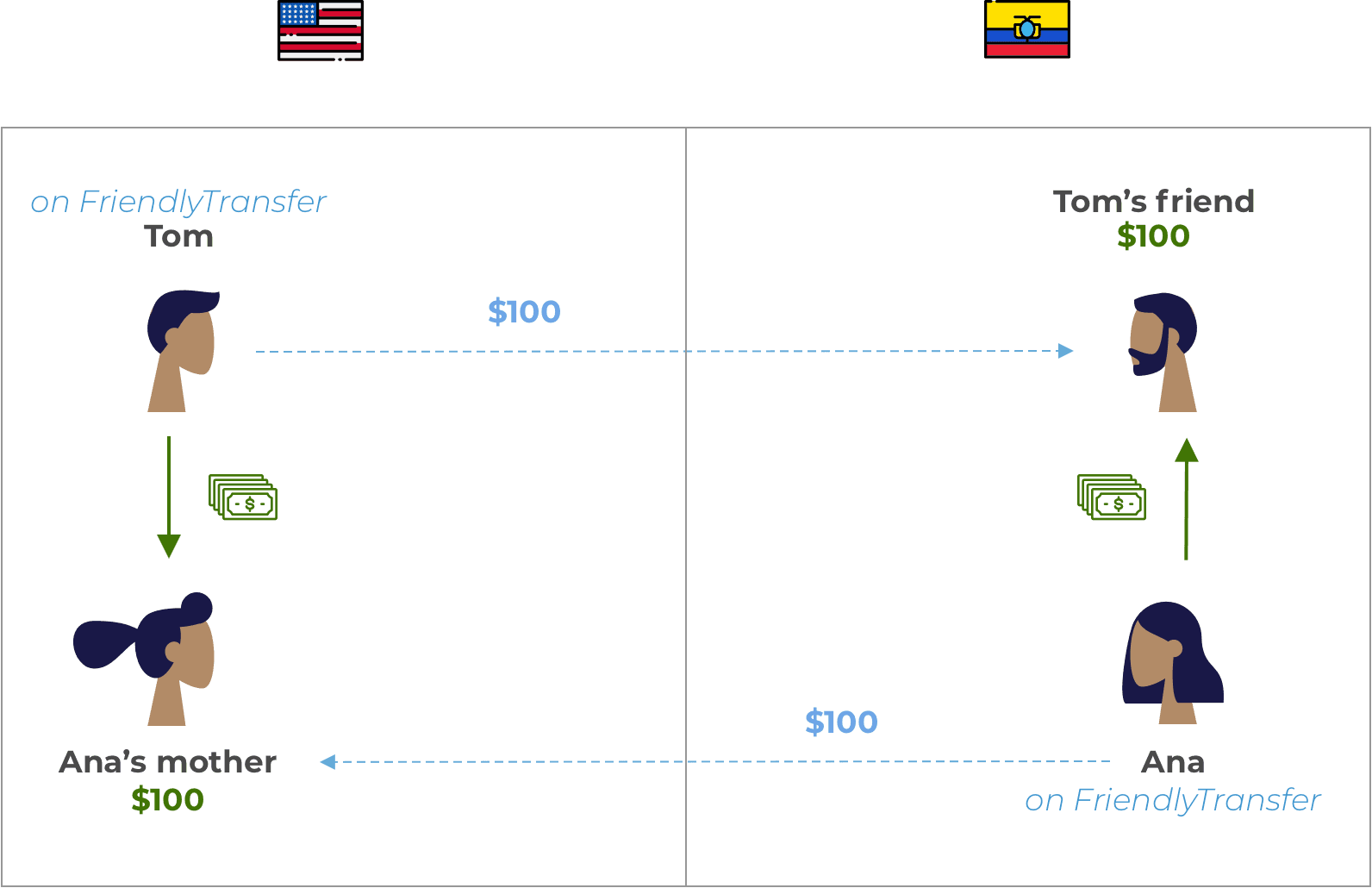
FriendlyTransfer helps users connect with matching transferring needs based on $ amount, but opposite locations. For example, Tom lives in the U.S. and needs to send $100 to his friend in Ecuador. Meanwhile, Ana needs to send $100 to her mother in the U.S. FriendlyTransfer helps Tom connect with Ana. Tom makes a local transfer to Ana's mother in the U.S., and Ana makes a local transfer to Tom's friend in Ecuador. Both Tom's friend and Ana's mother receive $100 dollars. Tom and Ana save the international transfer costs and the money never moves borders.
Research Revealed Users Needed More Clarity and Confidence
Before delving into the challenge, to fully understand FriendlyTransfer's users and their pain points, I conducted three remote in-depth interviews. I also analyzed existing surveys conducted by FriendlyTransfer's founding team.
Key research insights:
- Three in-depth interviews with existing users
- Analyzed existing surveys & interviews
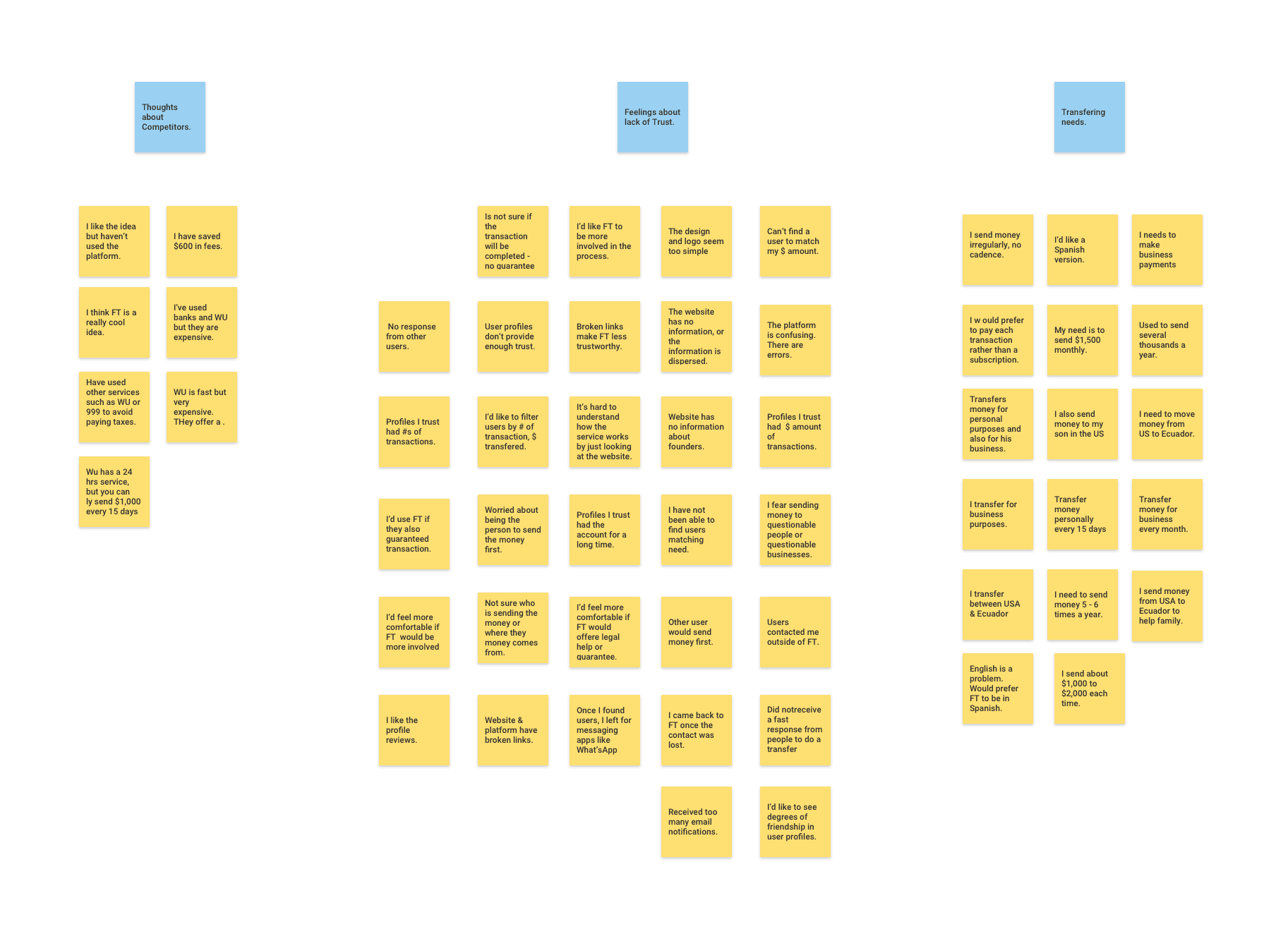
FriendlyTransfer's Process was Unclear, Unstructured, and Hard to Trust
"The Platform is Confusing"
1. No Process
Users are unsure who should make the local transfer first. Experienced users had to explain to new users what the process looks like and who makes the local transfer first. New users felt a lack of control not knowing how the process works.
"Once I found users, I left for messaging apps like whatsapp"
2. Untrustworthy
After exchanging phone numbers in platform, some users left to complete their processes in WhatsApp. Once outside FriendlyTransfer, users found themselves feeling vulnerable and insecure as they would have no proof or guarantee of local transfer.
"I'd feel more comfortable if FT was move involved in the process"
3. No Involvement
Users felt that aside from facilitating the connection, FriendlyTransfer serves no further purpose. Users feel that FriendlyTransfer is not involved in the transaction at all - making them feel vulnerable to a problem with the local transfer.
Designing V1 to Fix Clarity, Trust, and Platform Involvement
With these important discoveries, I set out to ideate version one of a possible solution focusing on the following aspects.
Confusing Process
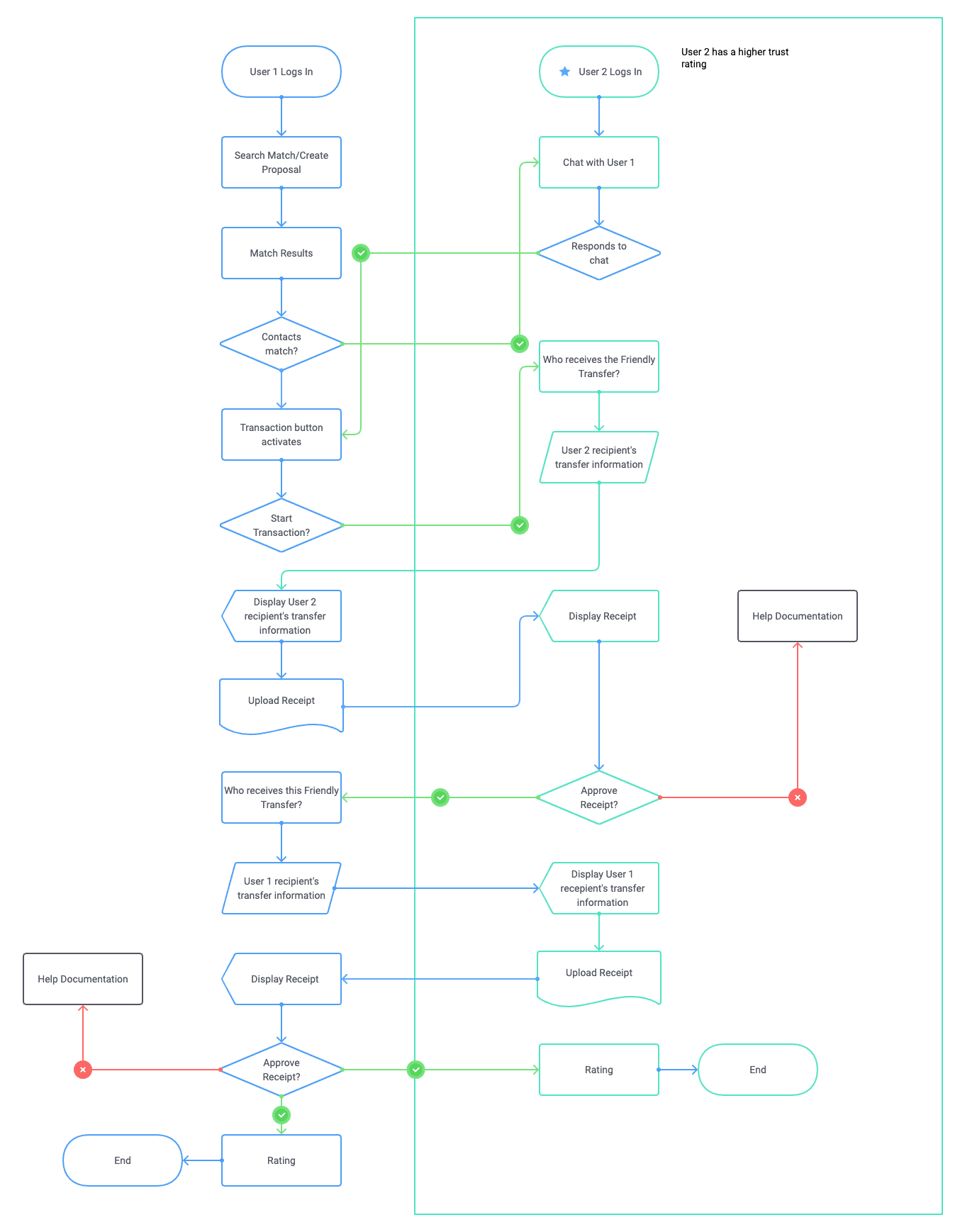
Transparent Process
Untrustworthy
Designed for Trust
No Involvement
Involvement from Friendly Transfer
1. Structured Transaction Process
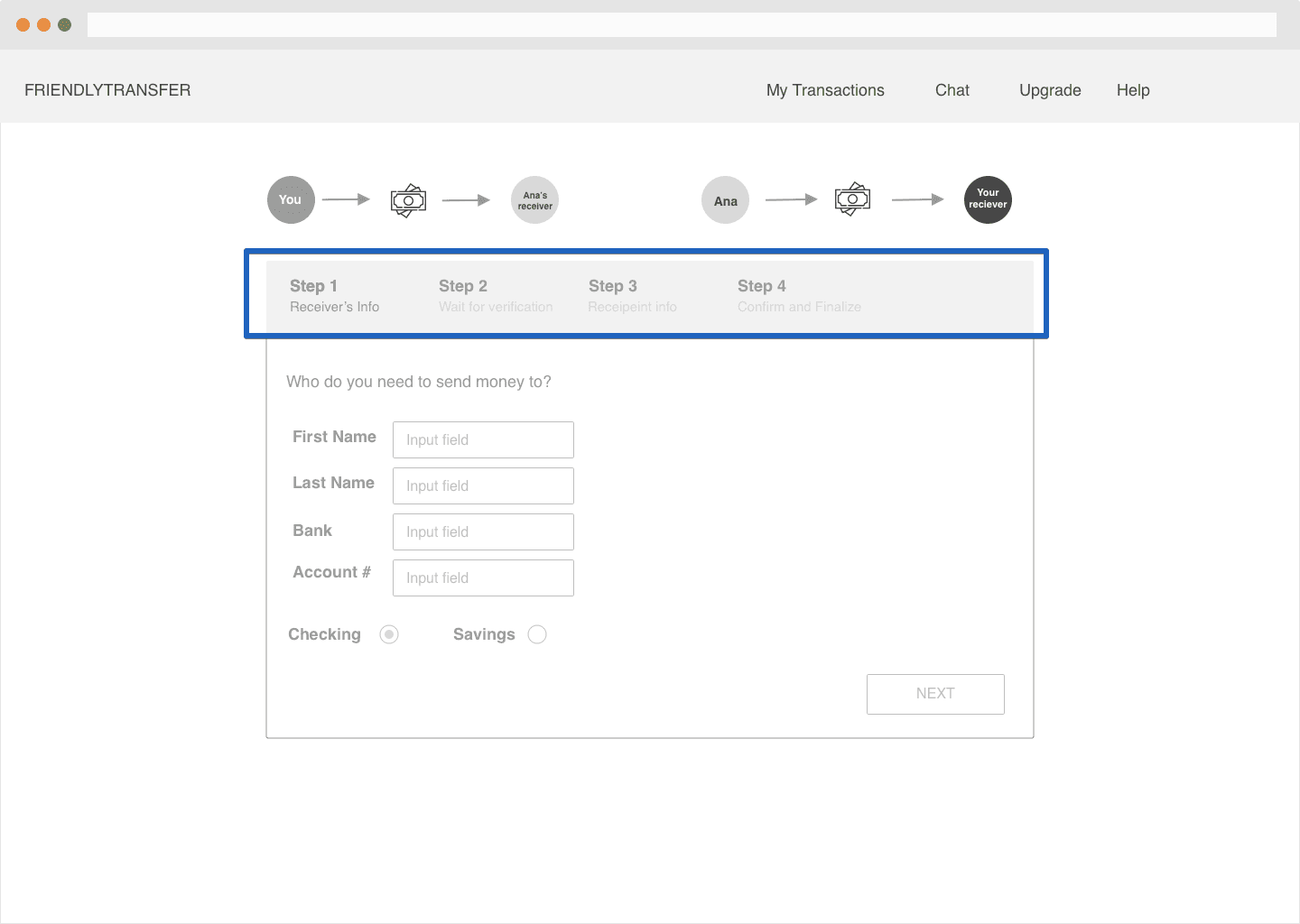
2. Transparent Transaction Process
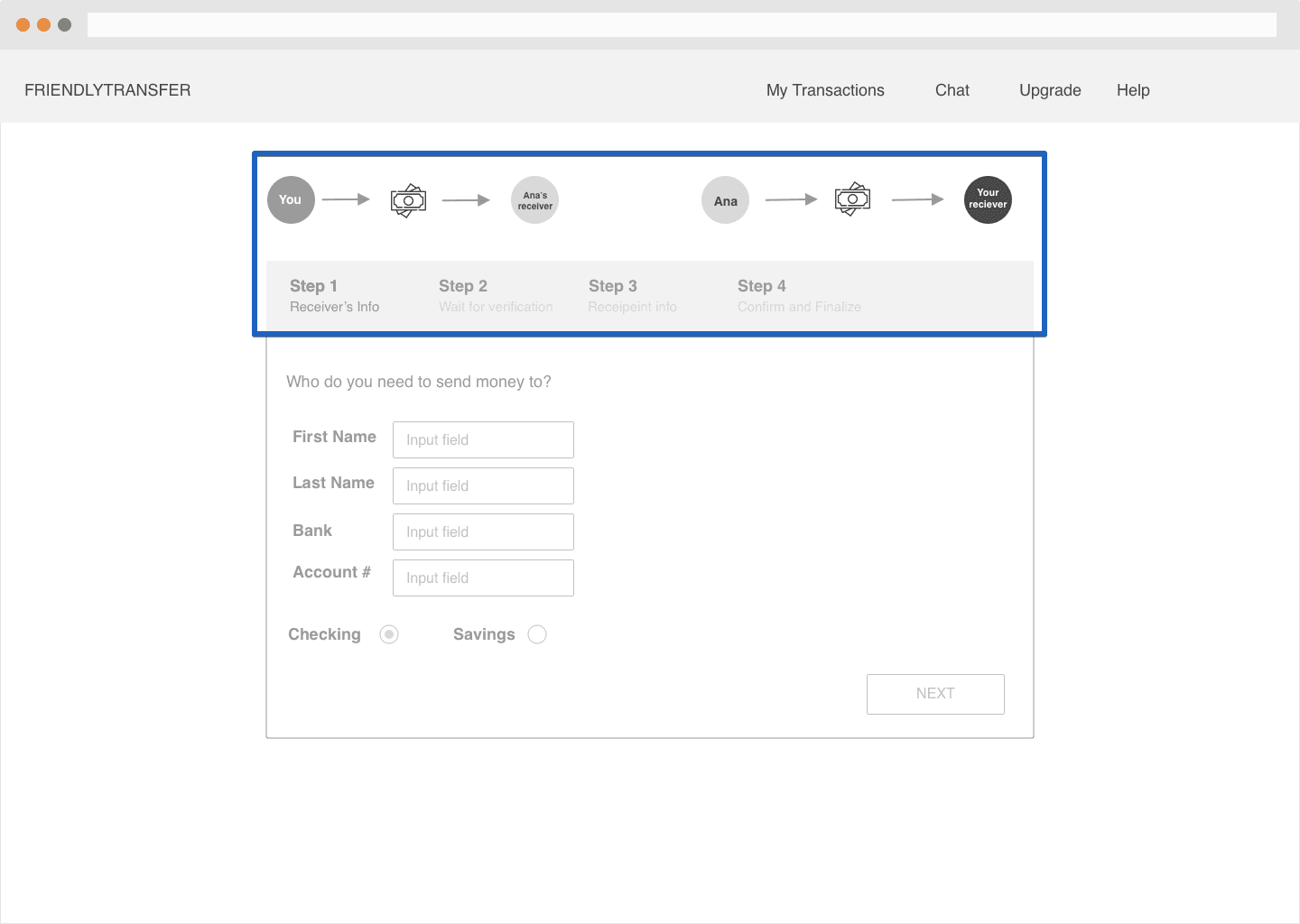
3. Involvement from Friendly Transfer
User Testing Exposed Missing Control and a Bank-Like Experience
With a basic wireframe prototype, I started guerrilla testing with one new user and remote testing with three existing users. While the prototype solved most problems, it surfaced a problem I hadn't anticipated.
"What if I need to contact my match in the middle of the transaction?"
1. Existing users felt they lost control once in the wizard. They wanted the ability to communicate with their match at all times.
"This feels too structured, like a bank. I thought this was supposed to be different."
2. Existing users felt the wizard reminded them of the negative aspects of a bank.
Refining the Flow: Chat-First, Wizard-Free, More User Control
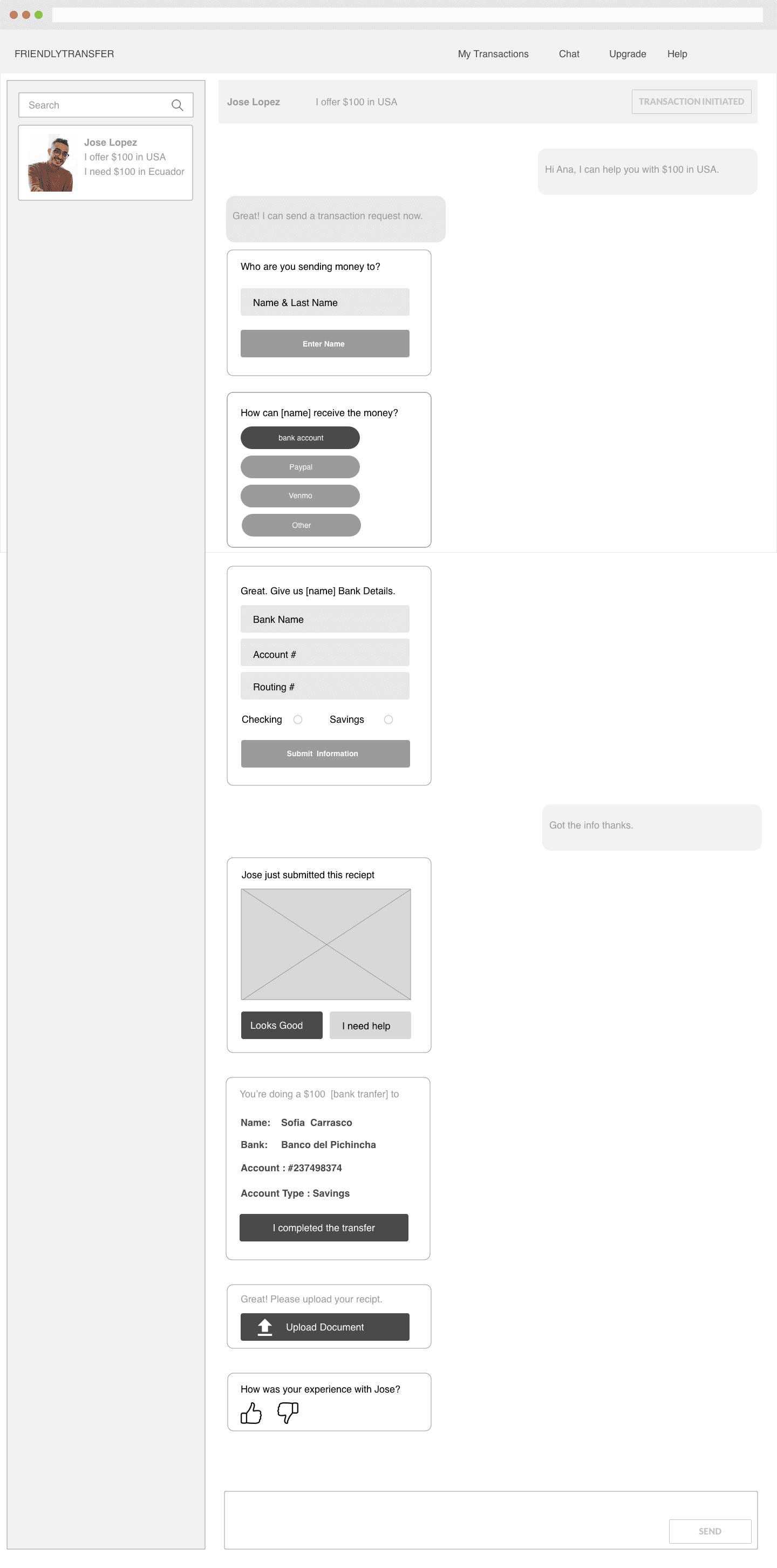
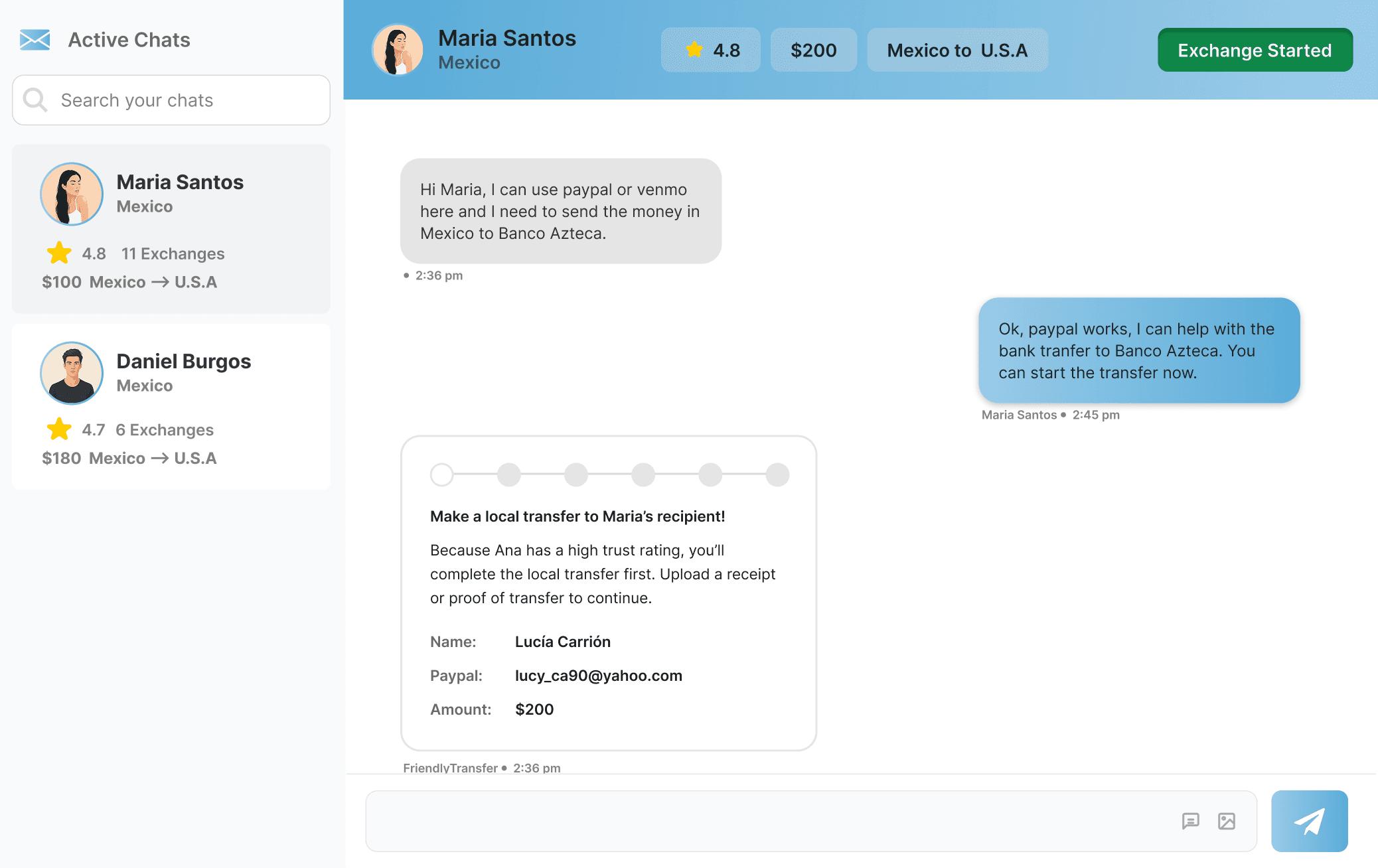
- Allow users to contact their matches at all time by bringing the transaction wizard into the chat.
- Without a transaction wizard, no comparison to banks will be made - hopefully.
- Allow first- time users to initiate an exchange only when the match has responded.
From Wireframe to Prototype
Usability Testing Round 1
Starting an Exchange Was an Issue
- Can participants understand how the platform works and how is involved?
- Can participants understand how to start an exchange?
- Can participants start the exchange successfully?
- Can participants understand the forms and process?
| P1 | P2 | P3 | P4 | |
|---|---|---|---|---|
| Understood how platform works | With Effort | With Effort | With Ease | With Ease |
| Understood how to start exchange | With Effort | With Effort | With Effort | With Effort |
| Started transaction successfully | With Ease | With Effort | With Effort | With Effort |
| Understood forms & process | With Ease | With Ease | With Ease | With Ease |
Adjusting Again
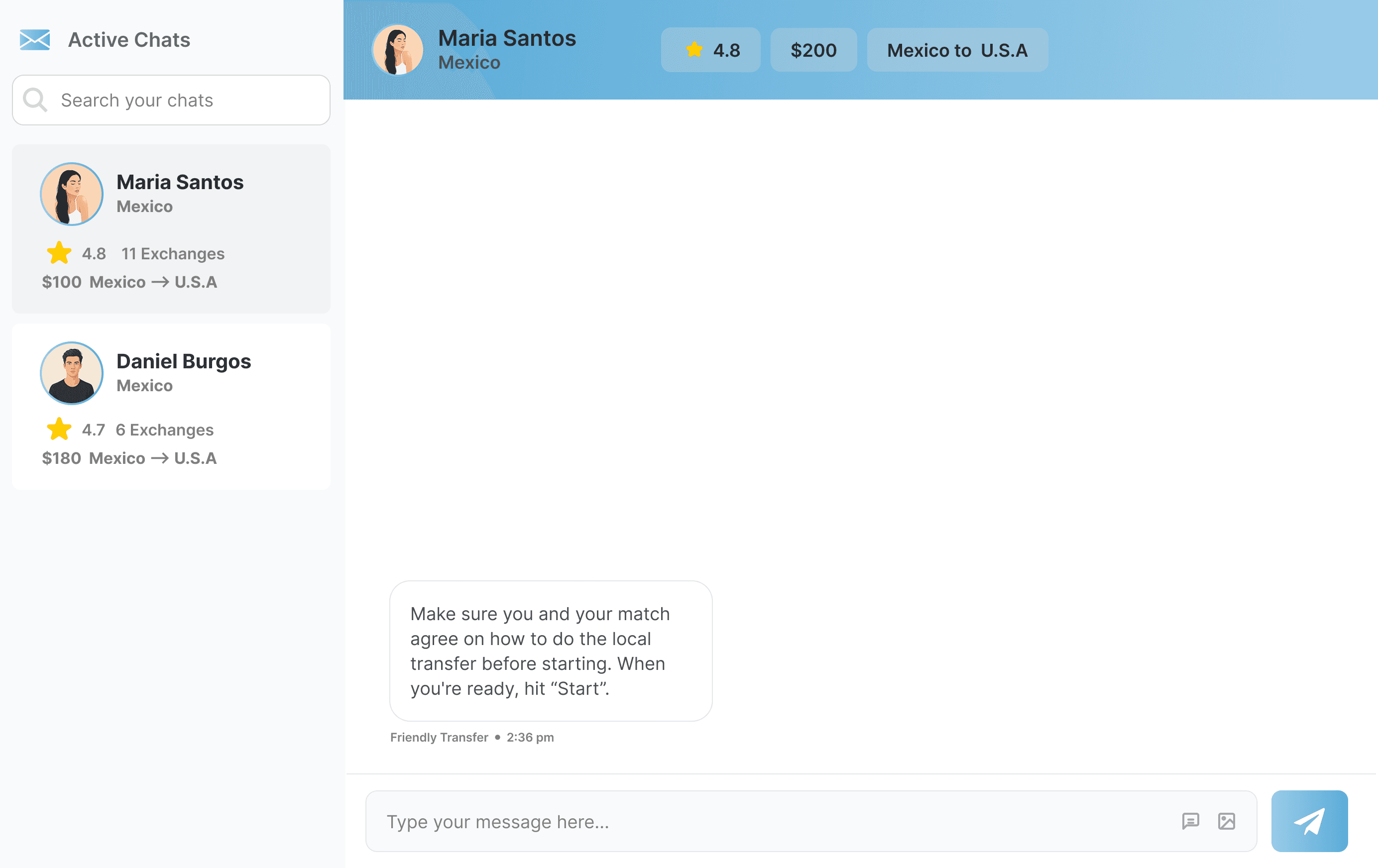
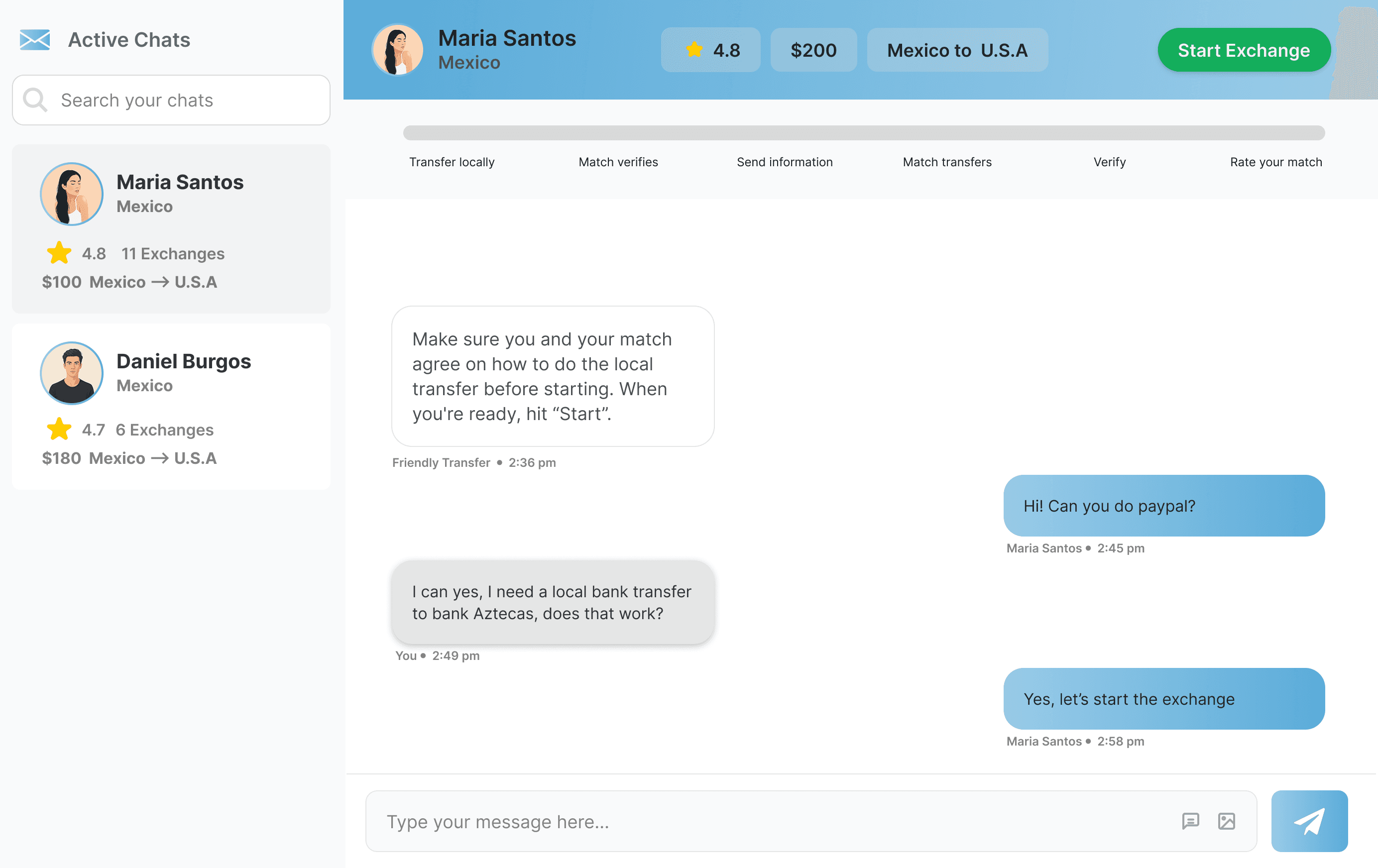
Taking Advantage of Empty State
- Take advantage of empty state - describe first steps to users.
- Reveal exchange steps at the top of the chat - only when match has responded to initial message.
Usability Testing Round 2
Starting an Exchange Was Still a Clear Issue
| P5 | P6 | P7 | |
|---|---|---|---|
| Understood how platform works | With Ease | With Ease | With Ease |
| Understood how to start exchange | With Effort | With Effort | With Effort |
| Started transaction successfully | With Ease | With Ease | With Effort |
| Understood forms & process | With Ease | With Ease | With Ease |
Yet Again!
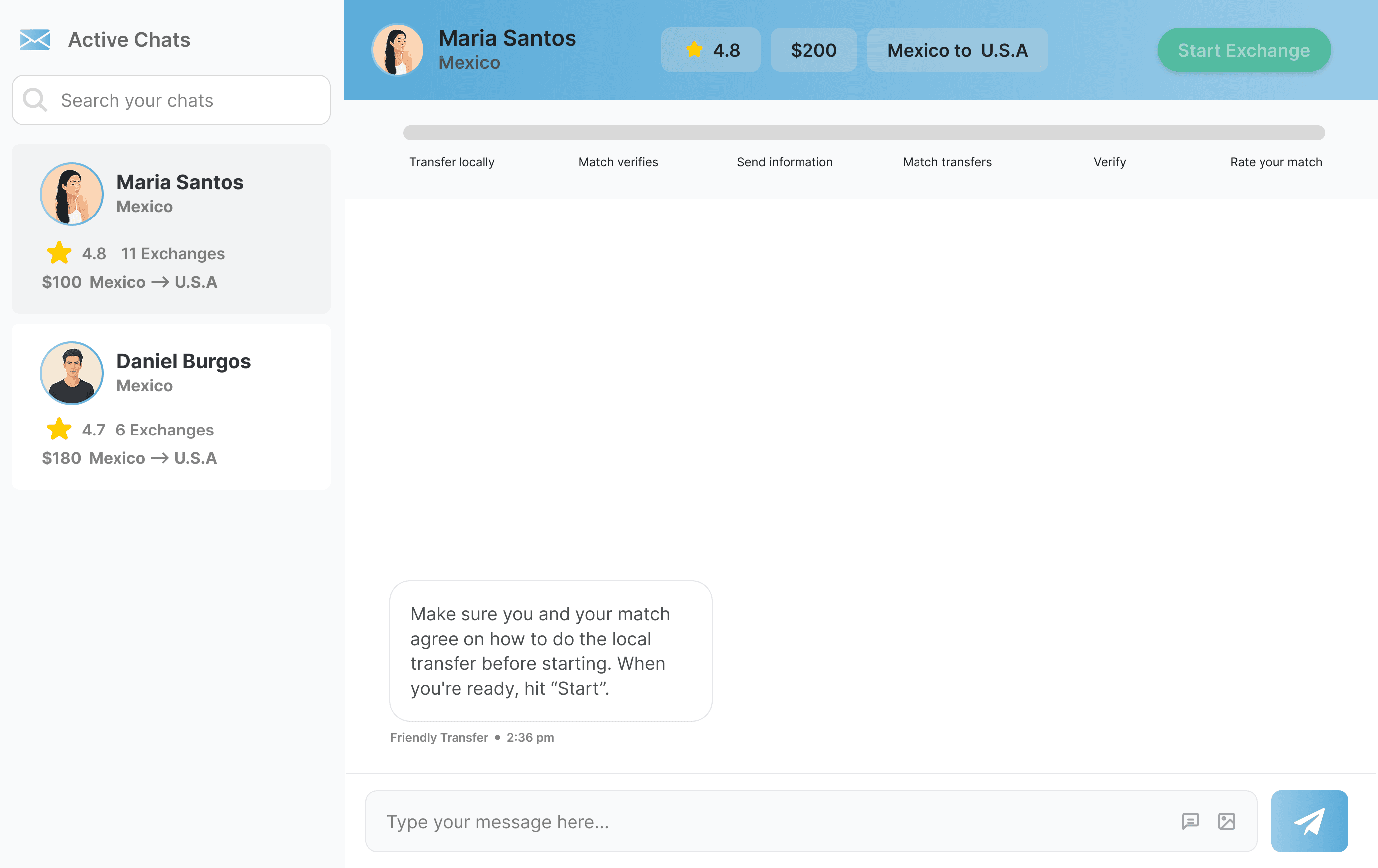
Adjusting
- Adjusted empty state.
- Revealed the Start button, but did not activate it until the match responds.
Could not resist the cliche!
Third Time's the Charm
| P8 | P9 | P10 | |
|---|---|---|---|
| Understood how platform works | With Ease | With Ease | With Ease |
| Understood how to start exchange | With Ease | With Ease | With Ease |
| Started transaction successfully | With Ease | With Ease | With Ease |
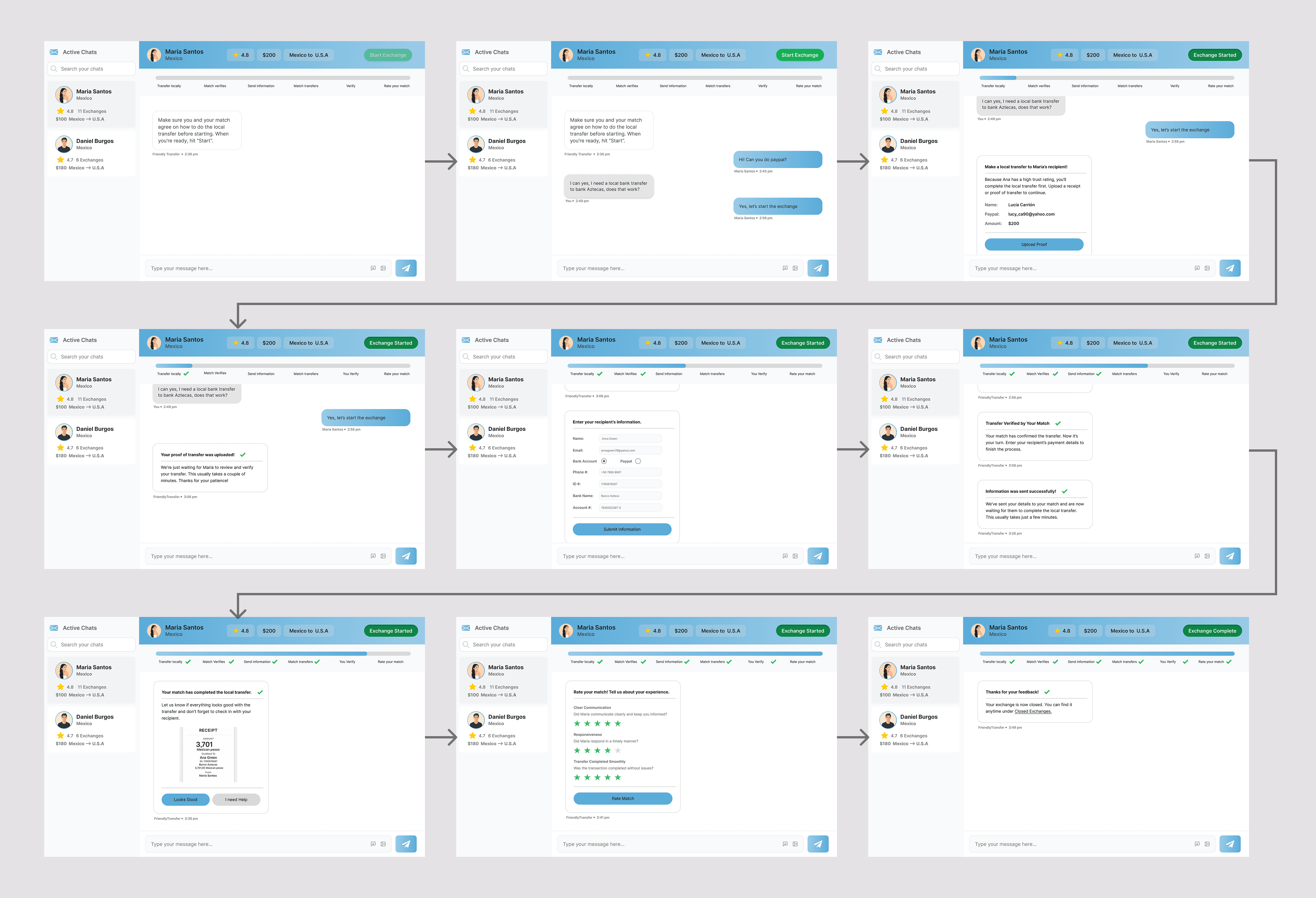
Delivering the final flow
Providing Users a Trust-Based Experience
The final product offers a clear and transparent process that is structured for trust and has involvement from FriendlyTransfer.