Designing Sarcasm: Reclaiming Voice, Humor & Identity
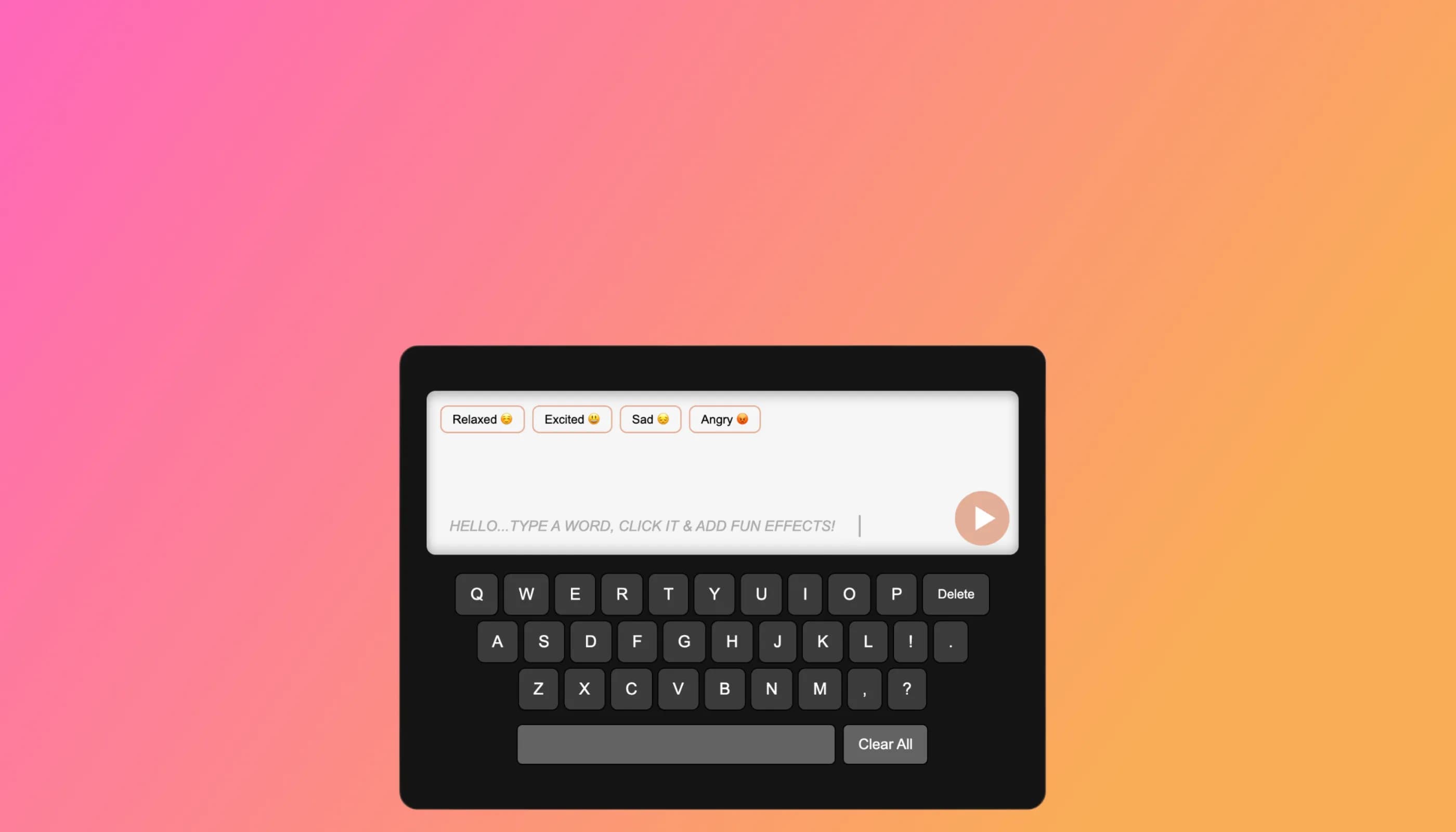
I redesigned the interface of an Alternative and Augmentative Communication device to help people with speech impairments express tone, emotion, and humor, guided by research with individuals living with Motor Neuron Disease (MND).
Problem
People who rely on text-to-speech tools often lose the ability to express tone, sarcasm, or emotion making their communication feel flat and impersonal.
Solution
Built and deployed a working voice interface prototype, as part of a Master's program in Design and Innovation, enabling users to shape how messages sound using pitch, pacing, and emphasis.
Impact
- Turned synthetic speech from flat and robotic to expressive and human
- Empowered users to communicate with nuance and personality
Designing Humor into Assistive Speech Technology
Most AAC (Augmentative and Alternative Communication) devices help people with speech impairments communicate clearly — but that clarity often comes at the cost of personality. For people with Motor Neuron Disease (MND), who increasingly rely on these tools as speech becomes difficult, this can be especially frustrating. In interviews and literature, a consistent theme emerged: users couldn't express humor or sarcasm. Timing, pitch, and personality were flattened — and for many, that felt like losing a part of themselves. This project explores how we might restore some of that expressive power. I designed and prototyped an interface that lets AAC users shape how their message is delivered using pitch, speed, emphasis, pauses, and elongation — key elements of sarcastic and humorous tone.
"I used to be the one making jokes — the life of the party. I won't be able to keep that up as this progresses."
From Research to Prototype
With a problem statement in place, I used the Double Diamond design method to produce a possible solution. I explored existing literature to deepen my understanding on AAC user needs specific to sarcasm, and also to understand the phonetic qualities of sarcasm. I derived crucial insights from this research that directly guided all ideation and design decisions. The first prototype went through a round of feedback from a speech specialist. A second and final version was created after the round of feedback.
Research
Research Shows AAC Breaks the Cues That Make Humor Work
Research participants:
- A detailed interview with a person living with MND who had begun losing speech
- A casual conversation with a second person recently diagnosed
- Secondary research on AAC usage and phonetic features of sarcasm
"I want to be able to control spacing and speed and tone, like pitch — if you could have a dial to control the speed as it's playing or just pause it so someone can talk back and you can have a more natural conversation."
"Each day presents countless frustrations as humor and incisive comments require timing and inflection"
"No sense of humor — it [humor] just doesn't come across in the same way — it doesn't pause where you would pause, that's a really big one."
Define
What Makes Humor Work: Pitch, Speed, Pausing
- Control Pitch
- Control Speed
- Control Pausing
Develop & Test
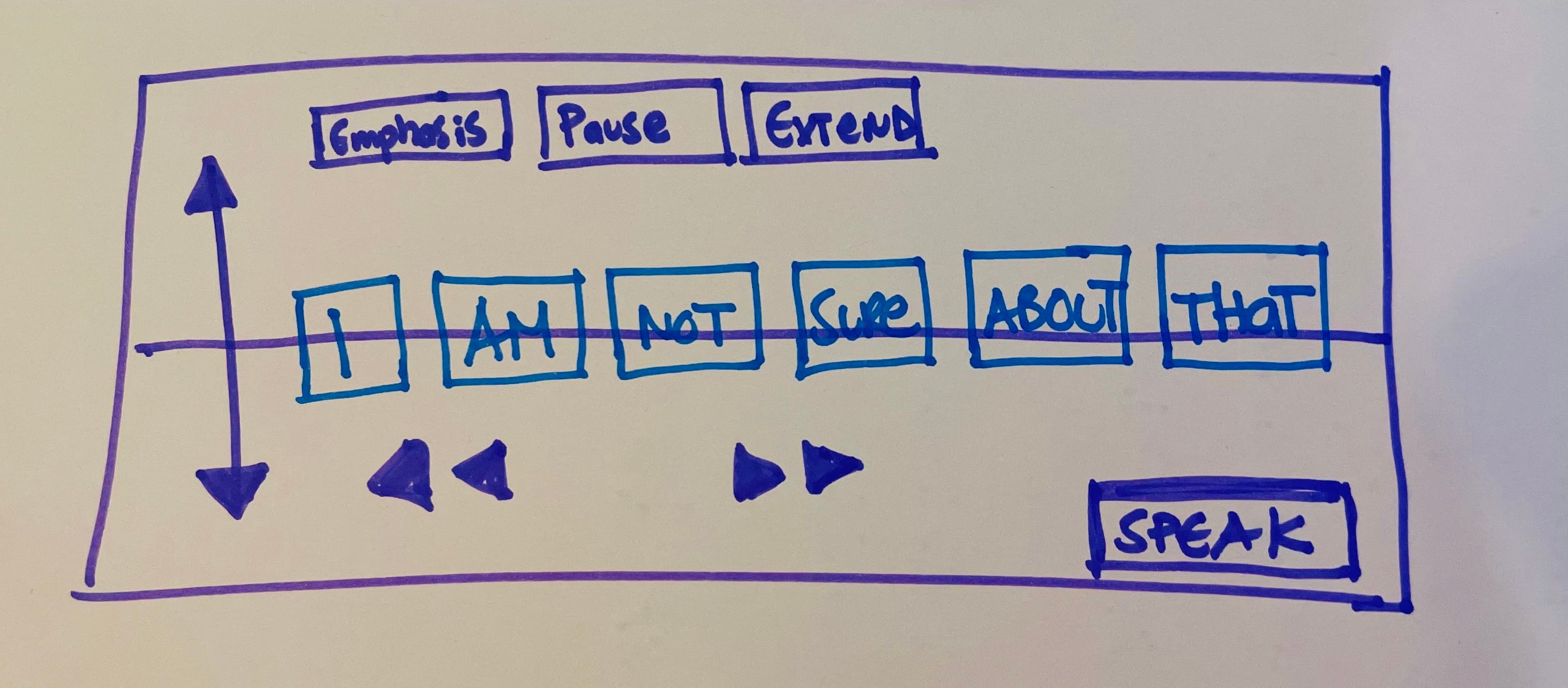
Testing Low-Fi Controls for Pitch, Speed, and Pausing
Initial ideas included:
- Floating, draggable words
- Sliders and levers for pitch and speed
- Tap-to-emphasize or pause functionality
Develop & Test
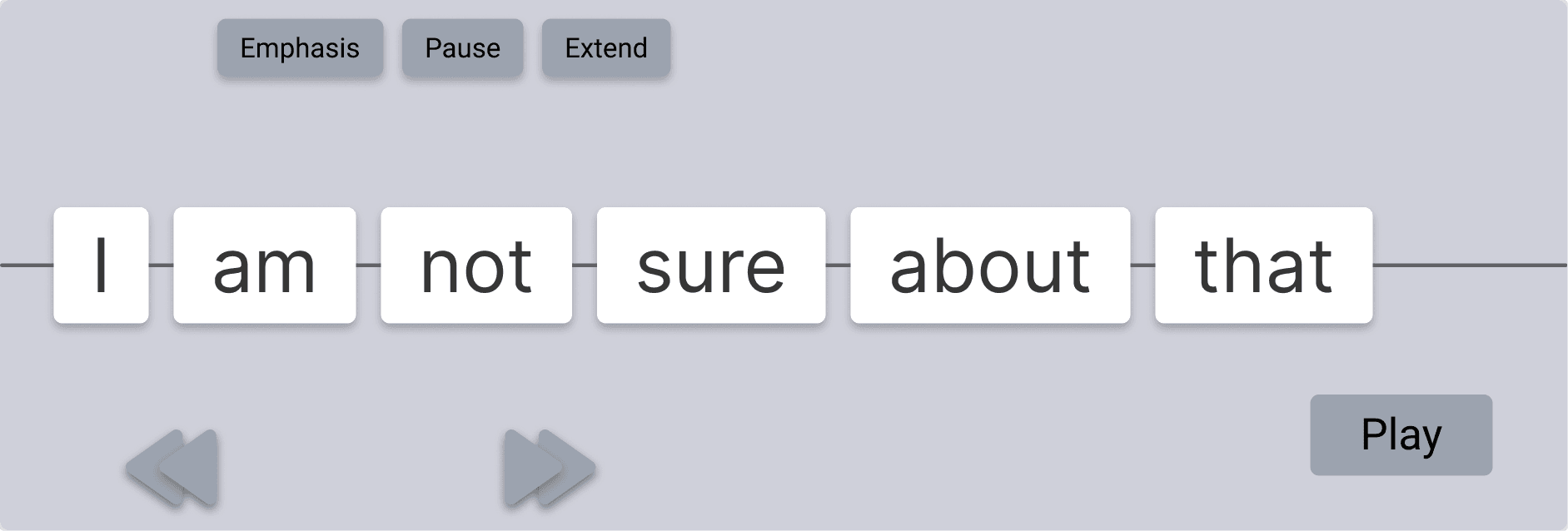
Prototyping Interactions for Tone: Emphasis, Pitch & Speed
- Add emphasis
- Raise the pitch of one word
- Add a pause
- Slow down delivery
Drag a word to raise or lower pitch
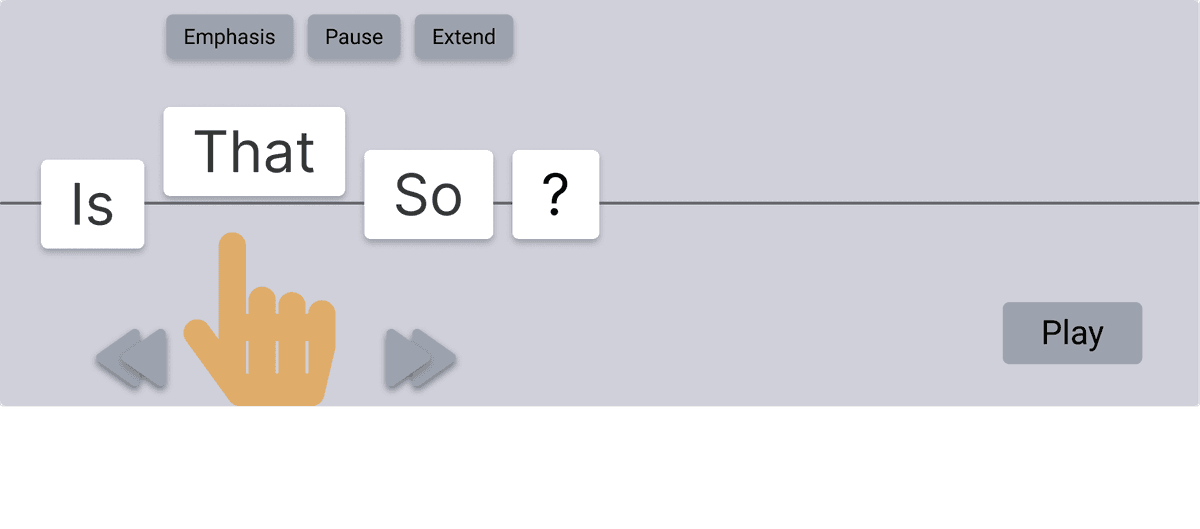
Add pause by dragging button between words
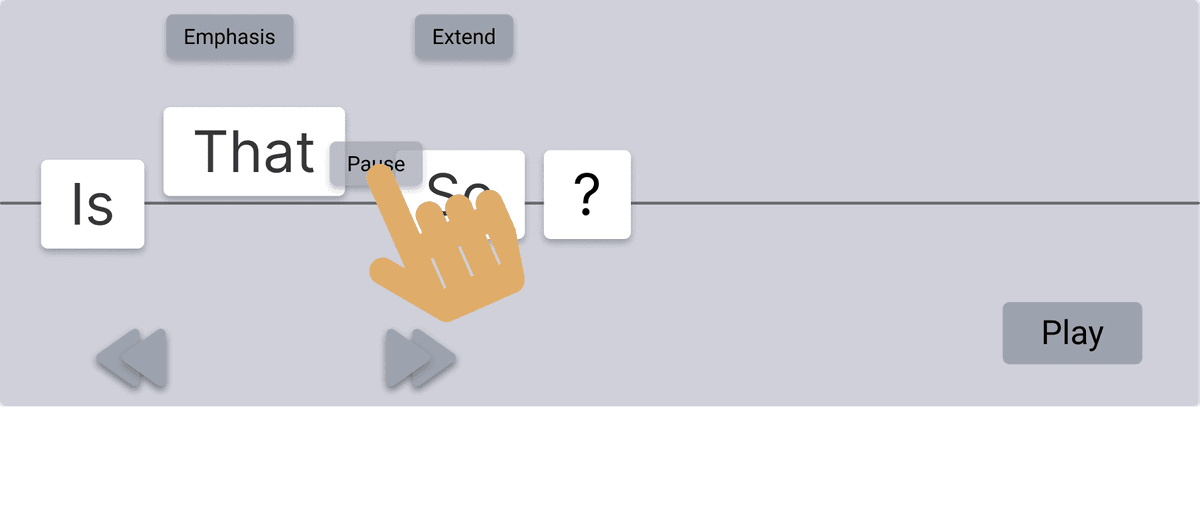
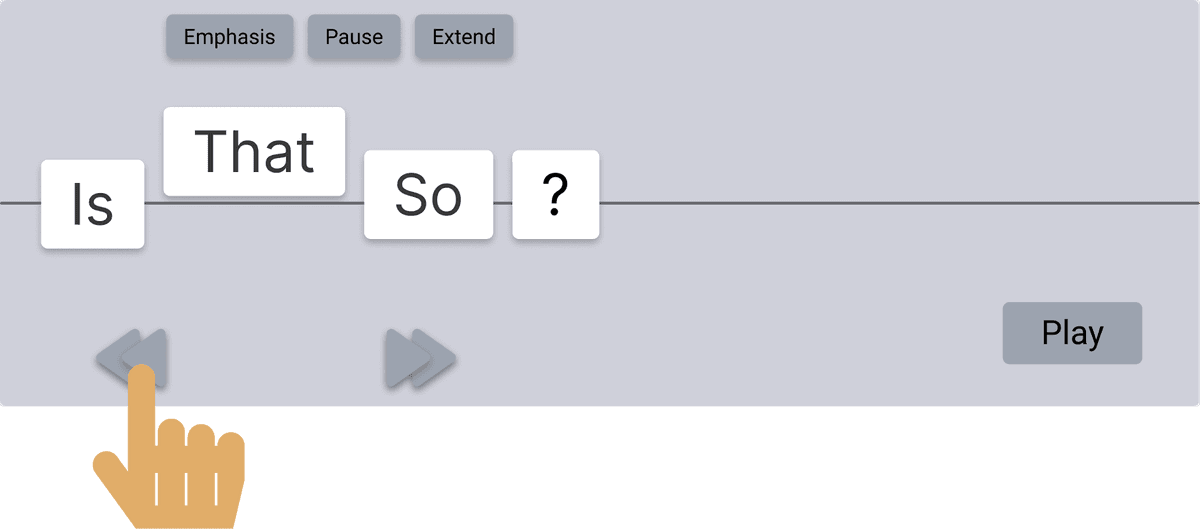
Slow down or speed up delivery
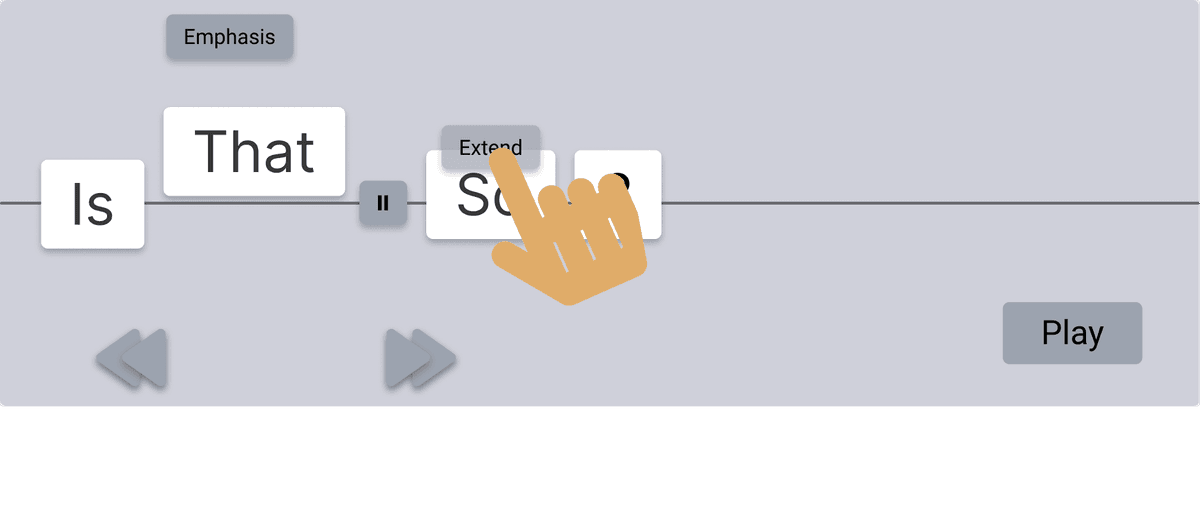
Extend a word by dragging and dropping the button
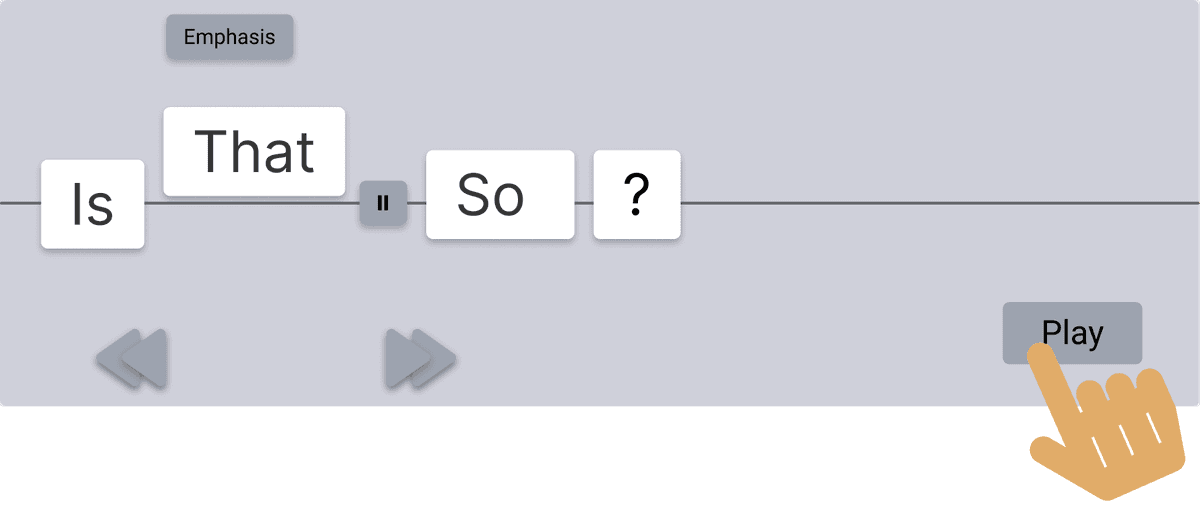
Visual cues for all effects
Develop & Test
Expert Feedback: Reduce Effort, Simplify Actions
- Reduce dragging effort from user
- Reduce spacing effort from user
- Simplify interactions for faster use
Deliver
Final Design
- Replaced drag-and-drop with a popup menu
- Added visual cues for active effects
- Prioritized ease of use on touch interfaces
- Added full sentence effects
Adding Emphasis on a Word
Speeding a Word Up
Slowing a Word Down
Raising a Word's Pitch
Lowering a Word's Pitch
Adding Full Sentence Effects
Next: Test With AAC Users, Validate Humor, Improve Accessibility
The final prototype delivered on its goal: empowering AAC users with a way to infuse humor, sarcasm, and personality into their speech. By focusing on how something is said — not just what is said — the tool opens up new dimensions of self-expression, creating room for nuance, tone, and playfulness in a space often defined by limitation. Designing for people with disabilities reminds us that design is never just functional — it's emotional, contextual, and deeply human. Even when accessibility isn't the focus, this perspective helps us see that our work shapes more than interactions. It shapes connection. Whether we're crafting voice, movement, or interface, behind every experience is a person trying to be understood — and our responsibility is to make space for their full expression.
Next steps:
- Test the prototype with AAC users and real communication partners
- Evaluate if sarcasm/humor is perceived as intended
- Add a preset system to save commonly used voice styles
- Explore more accessible controls for users with motor limitations